
Choosing gravel sounds simple until you see several similar piles at a supplier. Pea gravel, river rock, and crushed stone can look alike from a distance, yet they behave differently after installation. Picking the wrong material may leave a path that shifts, a patio that feels unstable, or a drainage area filled with unwanted fines.
This guide answers what is pea gravel, what it is made from, what it looks like, and where it works best. It also explains its limits, so you can choose the right stone before ordering.
Quick answer: Pea gravel cost is a loose aggregate made of small, smooth, rounded or partly rounded stones. Many suppliers sell it near 3/8 inch in diameter, but the exact size, rock type, and color vary by source. It is commonly used for landscaping, paths, patios, drainage, dog runs, and decorative ground cover.
Pea Gravel at a Glance
- Shape: Rounded or partly rounded, with smoother edges than crushed stone
- Common size: Often close to 3/8 inch, though supplier ranges vary
- Colors: Gray, tan, brown, cream, white, red, black, or mixed tones
- Best known for: Decorative landscaping, drainage, paths, and contained patio areas
- Main drawback: The rounded stones move because they do not lock together firmly
What Is Pea Gravel?
Pea gravel is small gravel identified mainly by particle size and rounded shape. It is not one rock species. A load may contain one local stone or a mixture, depending on its source.
The U.S. Geological Survey explains that natural sand and gravel deposits commonly form through bedrock weathering, followed by transport and deposition by water or ice. Producers screen the material by size and may wash away dirt and fine particles.
Why Is It Called Pea Gravel?
The word “pea” refers to approximate size, not a perfect match to a garden pea. Products often contain round, oval, and partly fractured pieces.
Many suppliers sell material near 3/8 inch. However, the trade name does not guarantee one sieve range. ASTM D448 defines formal size-number ranges for coarse aggregate, so exact projects should specify a measured size or grade.
For a closer look at inches, millimeters, and supplier grades, use the pea gravel sizes guide.
What Is Pea Gravel Called?
Pea gravel may also be sold as pea stone, pea rock, pea pebbles, pea stone gravel, or CM16 in some markets. Ozinga, a US aggregate supplier, lists these terms for its pea gravel product. Local names still vary, so compare the stated size, shape, and source instead of relying on the product name alone.
There is usually no practical difference between pea stone and pea gravel when both names describe the same small, rounded product. A supplier may still use “pea stone” for a specific local blend, so ask for a sample before placing a large order.
What Is Pea Gravel Made Of?
Pea gravel can be made from several rock types. Its composition depends on the geology near the source. One region may supply mostly granite or quartz-rich stone, while another may sell limestone, sandstone, basalt, or mixed river gravel.
This means there is no single answer to “what kind of rock is pea gravel?” The best answer is that pea gravel is a size-and-shape category made from locally available rock. The parent material affects its color, hardness, porosity, and how quickly weak pieces break down.
How Does Pea Gravel Become Rounded?
Natural gravel becomes smoother as fragments move, collide, roll, and abrade in water or glacial systems. Harder stones may remain intact longer than softer pieces. USGS research shows that roundness and rock type vary with source, transport history, and material strength.
Not every bag comes directly from an active riverbed. Producers can excavate old deposits, screen material from gravel pits, or process aggregate to meet a product range. That is why “river rock,” “natural gravel,” and “pea gravel” should not be treated as exact synonyms in every market.
What Does Pea Gravel Look Like?
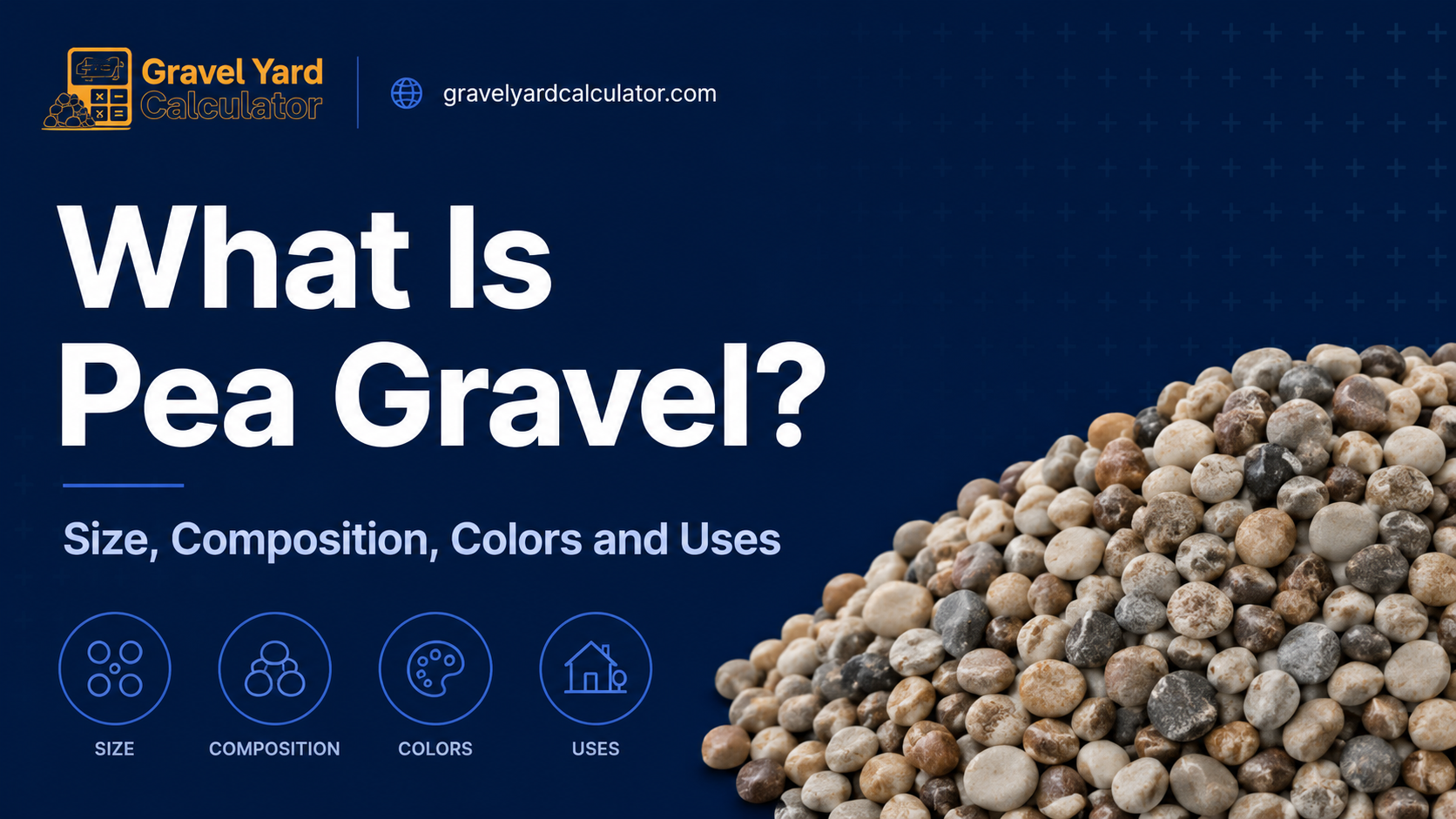
Pea gravel looks like a loose collection of small pebbles with smoother edges than crushed stone. The pieces are rarely perfect spheres. Most are round, oval, flat, or partly fractured, with natural differences in size and surface texture.
Typical Size
Many residential products are close to 3/8 inch, or about 9.5 millimeters. Some suppliers sell smaller or larger ranges under the same general name. Check the product label or sieve specification before ordering for a drain, playground, concrete mix, or other project that needs a defined grade.
Common Colors
The color comes from the source rock and mineral content. Common choices include:
- Gray and charcoal
- Tan, buff, and brown
- Cream and white
- Red or rust tones
- Black or dark mixed stone
- Multicolor blends
White pea gravel is usually a light-colored stone product, not a separate size category. Its exact composition may be quartz, limestone, marble, or another pale local material. Ask the supplier what stone it contains if color consistency or weathering matters.
Shape and Texture
The surface usually feels smoother than freshly crushed aggregate. That softer profile can feel more comfortable underfoot. It also creates the material’s main weakness: rounded particles slide past one another instead of interlocking tightly.
Physical Properties of Pea Gravel
A clean, loose layer lets water pass through spaces between stones. Results still depend on soil, slope, base, fines, and a working outlet. Gravel cannot fix compacted clay or a site with nowhere for water to drain.
Does Pea Gravel Compact?
Pea gravel settles, but it does not compact like angular crushed stone. A plate compactor may seat the stones and reduce loose high spots, yet the particles still lack sharp edges that lock together. This makes the finished surface more likely to shift under shoes, wheels, tires, and furniture.
For paths and patios, use a firm compacted base, rigid edging, or a gravel grid where needed. The full how to stabilize pea gravel guide should cover base preparation, grids, edging, and binders without overloading this definition page.
Is Pea Gravel Comfortable to Walk On?
Small rounded stones can feel smoother than coarse crushed rock. Deep loose layers are harder to cross because each step pushes stones sideways. Wheelchairs, walkers, strollers, narrow tires, and small furniture feet may sink or drag.
The Spruce also notes that patios can feel unstable, scatter beyond borders, and need raking or replenishment.
Washed vs Unwashed Pea Gravel
Washed pea gravel has been rinsed to remove much of the clay, dust, sand, and fine material. Unwashed gravel keeps more of those fines. Neither label tells you the exact stone type or size, so review the full product specification.
|
Feature |
Washed Pea Gravel |
Unwashed Pea Gravel |
|
Surface |
Cleaner, with less dust and clay |
May contain soil, dust, sand, or clay fines |
|
Appearance |
Colors look clearer after rinsing |
Can look dull or muddy when wet |
|
Drainage use |
Usually preferred where clean voids matter |
Fines may reduce open space between stones |
|
Handling |
Less dusty after delivery |
Can create more dust or muddy runoff |
|
Typical choice |
Decorative beds, visible paths, drainage areas |
General fill or projects where fines are acceptable |
“Washed” does not mean sterile, polished, or ready for an aquarium. It only describes a processing step. Confirm cleanliness and intended use with the supplier.
What Is Pea Gravel Used For?
Common uses include decorative ground cover, contained paths, patios, borders, dog runs, playground surfacing, drainage, pipe bedding, and some concrete finishes. Suitability depends on the base, depth, edging, traffic, and product specification.
Landscaping Uses
Common landscaping applications include:
- Garden paths and stepping-stone gaps
- Patio borders and lightly used sitting areas
- Flower beds and non-organic ground cover
- Dry creek details and decorative drainage strips
- Dog runs and pet relief areas
- Pool or fire-pit surrounds outside required clearance zones
For project-by-project advice, see what pea gravel is used for rather than expanding every application on this definition page.
Drainage and Construction Uses
Clean material can create open spaces around suitable drains and pipes. It may also appear in bedding, backfill, concrete, or exposed aggregate finishes. Follow the engineering specification; do not replace specified crushed stone based only on appearance.
Playground Use Requires Extra Care
The CPSC playground handbook lists pea gravel as loose-fill surfacing, while stressing depth, containment, drainage, maintenance, fall height, and accessibility. Its table lists 9 inches of compressed material for protection up to a 5-foot fall height. Check local rules and current ASTM requirements before installation.
Pea Gravel Pros and Cons
Pea gravel works best when its appearance and drainage matter more than a rigid, tightly compacted surface.
|
Pros |
Cons |
|
Natural colors and a softer visual texture |
Rounded stones shift and spread |
|
Water can move through a clean loose layer |
Does not form a firm base like angular aggregate |
|
Fits curved borders and irregular shapes |
Needs strong edging in most surface projects |
|
Easy to rake and redistribute |
Leaves, soil, and weeds can collect between stones |
|
Often comfortable for light foot traffic |
Wheels and furniture may sink or drag |
|
Available in bags or bulk |
Color and size can vary between deliveries |
Pea Gravel vs Crushed Stone vs River Rock
Pea gravel differs from other aggregates mainly in size, shape, and how firmly the particles lock together.
|
Material |
Typical Shape |
Surface Stability |
Common Uses |
Main Limitation |
|
Pea gravel |
Small and rounded |
Low to moderate |
Paths, beds, dog runs, decorative drainage |
Moves without edging or stabilization |
|
Crushed stone |
Angular with fractured faces |
High when properly graded and compacted |
Bases, driveways, paths, structural layers |
Rougher appearance and feel |
|
River rock |
Rounded, often larger |
Low in loose layers |
Dry creeks, borders, drainage accents |
Larger pieces can be awkward underfoot |
Pea Gravel vs Crushed Stone
Crushed stone comes from mechanically breaking larger rock, which creates angular faces. Those edges can interlock under compaction. Pea gravel has smoother edges, so it remains looser and moves more easily. Use crushed aggregate when the project needs a firm base or stable driving surface.
Pea Gravel vs River Rock
Pea gravel may come from natural sand-and-gravel deposits and can be considered a small rounded gravel. Suppliers often use “river rock” for larger rounded stones. Because names vary, compare the measured size range instead of assuming every river rock product is larger.
When Is Pea Gravel a Good Choice?
This material suits loose, decorative surfaces that need drainage or curved borders. It performs best in contained, mostly level areas with a prepared base.
Good uses often include:
- Decorative landscape beds
- Garden borders and tree rings
- Short paths with firm edging
- Stepping-stone gaps
- Dog runs with a suitable base and cleaning plan
- Drainage strips built around a working outlet
- Low-traffic patio accents
When Should You Avoid Pea Gravel?
Avoid pea gravel where the finished surface must stay firm, resist heavy turning forces, or provide easy access for narrow wheels. Rounded particles are also a poor choice for steep slopes unless a designed stabilization system holds them.
Consider pea gravel alternatives for:
- Primary wheelchair or walker routes
- Steep paths and sloped beds
- High-traffic driveways
- Paver or slab bases that specify angular aggregate
- Dining areas with narrow furniture legs
- Spaces where loose stones can enter drains, pools, or mowing areas
- Projects without room for edging
How to Identify Pea Gravel Before Buying
Check a product sample before ordering:
- Measure several pieces. Confirm the actual minimum and maximum size.
- Check the shape. Most pieces should be rounded or partly rounded.
- Look for fines. Decide whether dust, sand, or clay suits the project.
- Wet the sample. This shows the true color and reveals muddy residue.
- Ask about the source. Rock type can affect color and durability.
- Compare two deliveries. Natural blends may change between batches.
Ask whether the material is washed, screened, sold by volume or weight, and available in the same blend later. Review pea gravel cost separately because price, delivery, order size, and location change.
For weight-based orders, confirm the supplier’s conversion factor. Moisture, grading, and source can change the pea gravel weight per cubic yard.
How Much Pea Gravel Do You Need?
You need the project area, finished depth, bag volume or bulk unit, and a reasonable extra allowance. For a rectangular area:
- Measure length and width.
- Convert the planned depth to feet.
- Multiply length × width × depth to get cubic feet.
- Divide cubic feet by 27 to get cubic yards.
- Confirm the supplier’s tons-per-yard factor before ordering by weight.
The site’s pea gravel calculator converts dimensions into cubic feet, cubic yards, estimated tons, bags, and cost. It includes a 10% allowance and advises users to confirm supplier density and order details.
Common Pea Gravel Mistakes
- Assuming every product is the same size: Drainage, playground, and decorative products may use different ranges.
- Using it as a structural base: Rounded gravel cannot replace specified compacted angular aggregate.
- Skipping edging: Loose stones migrate into lawns, beds, and paved areas.
- Installing a deep walking layer: Extra depth makes the surface harder to cross.
- Using a generic online weight: Density changes with moisture, stone type, grading, and void space.
- Calling it maintenance-free: Expect raking, cleaning, weed control, and occasional replenishment.
Frequently Asked Questions
What is the definition of pea gravel?
Pea gravel is small, rounded or partly rounded gravel commonly used in landscaping and drainage. The name describes the approximate particle size and shape rather than one exact rock type.
What is another name for pea gravel?
Common names include pea stone, pea rock, pea pebbles, pea stone gravel, and CM16 in some regions. Always confirm the measured size because local naming varies.
What is the difference between pea stone and pea gravel?
Often there is no difference. Suppliers may use both names for the same small rounded aggregate. Check the product sample and size range before ordering.
What kind of stone is pea gravel?
Pea gravel can contain granite, quartz-rich rock, limestone, sandstone, basalt, or mixed natural gravel. The available rock depends on regional geology and the supplier’s source.
Is pea gravel actually the size of a pea?
It is usually close, but not exact. Many products are near 3/8 inch, while others contain a wider range of small particles.
What color is standard pea gravel?
There is no universal standard color. Gray, tan, brown, cream, white, red, dark, and mixed blends are common because the source rock differs by region.
Is pea gravel good for drainage?
Clean pea gravel can allow water to move through its open spaces. The full system still needs suitable soil, slope, filter layers, and an outlet.
Does pea gravel wash away?
Fast runoff can move small rounded stones, especially on slopes or near downspouts. Proper grading, edging, and erosion control reduce movement.
What is smaller than pea gravel, and what is the next size up?
Stone dust, screenings, and some fine gravel products are smaller. Larger options may include 1/2-inch gravel, 5/8-inch gravel, or river rock. Supplier names and sieve ranges differ, so compare measurements.
Sources and Methodology
This guide uses USGS aggregate information, ASTM size classification, CPSC playground guidance, supplier terminology, and the site’s calculator method. Supplier examples describe specific products, not universal specifications.
What to Remember
Pea gravel is small, smooth, rounded aggregate rather than one fixed rock type. Its source controls the color and composition, while its rounded shape explains both its comfortable texture and its tendency to move. It suits decorative beds, contained paths, drainage details, and other projects that do not need a tightly compacted surface.
Before ordering, confirm the actual size, whether the product is washed, and how the supplier sells it. Then measure the area and depth instead of guessing. Once you understand what is pea gravel and where it performs well, use the calculator to estimate cubic yards, tons, bags, and cost for your project.