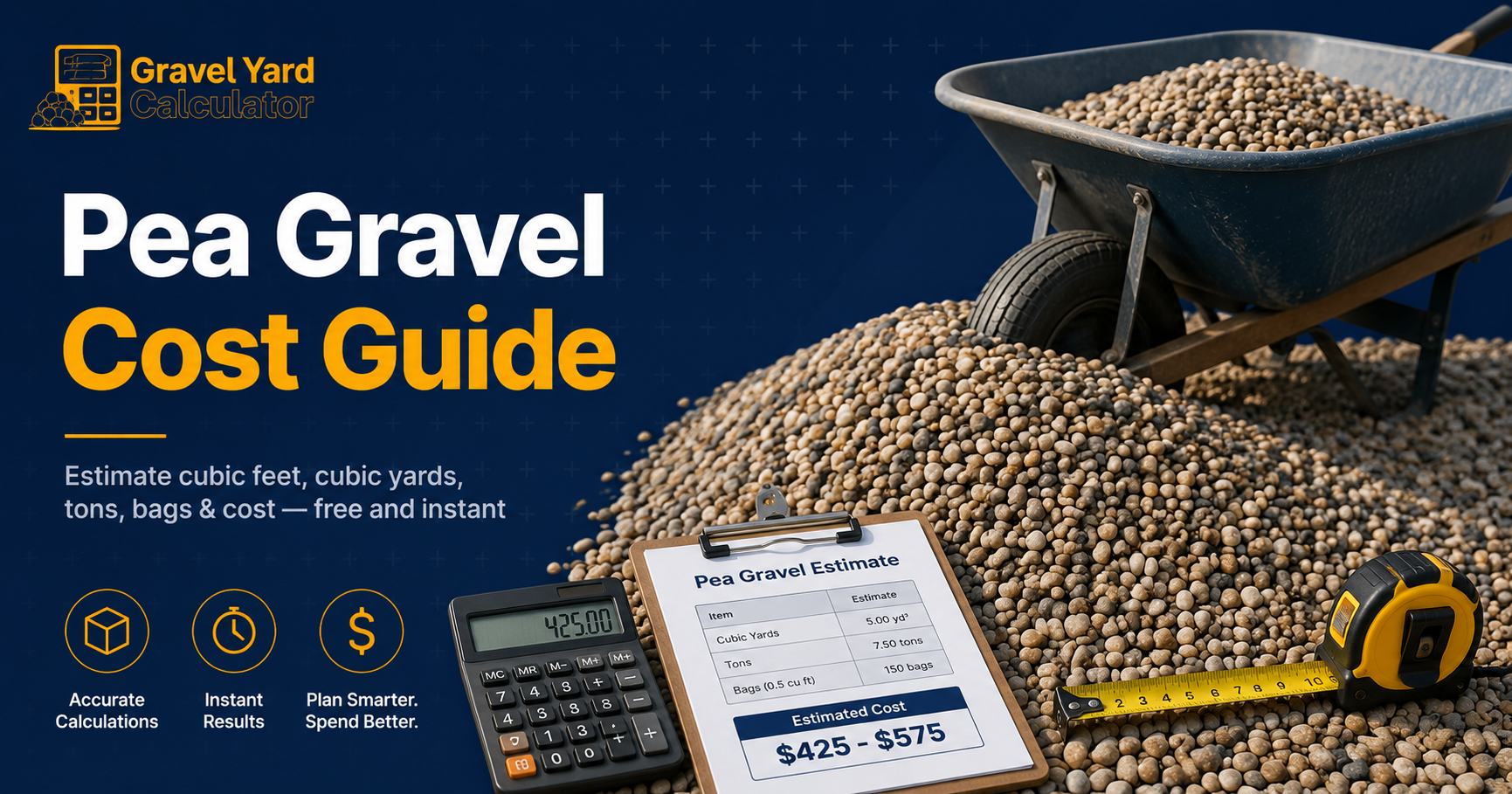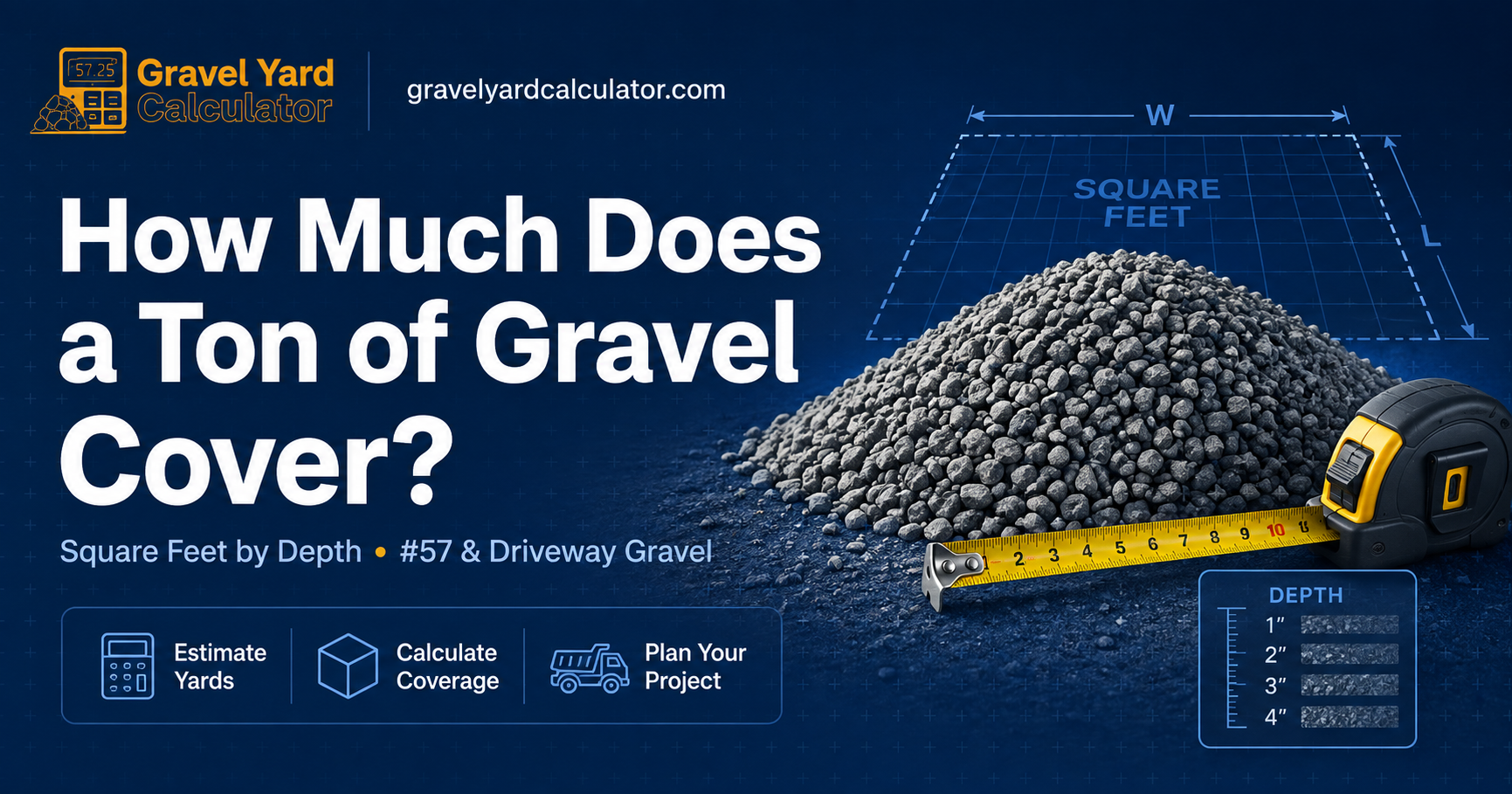
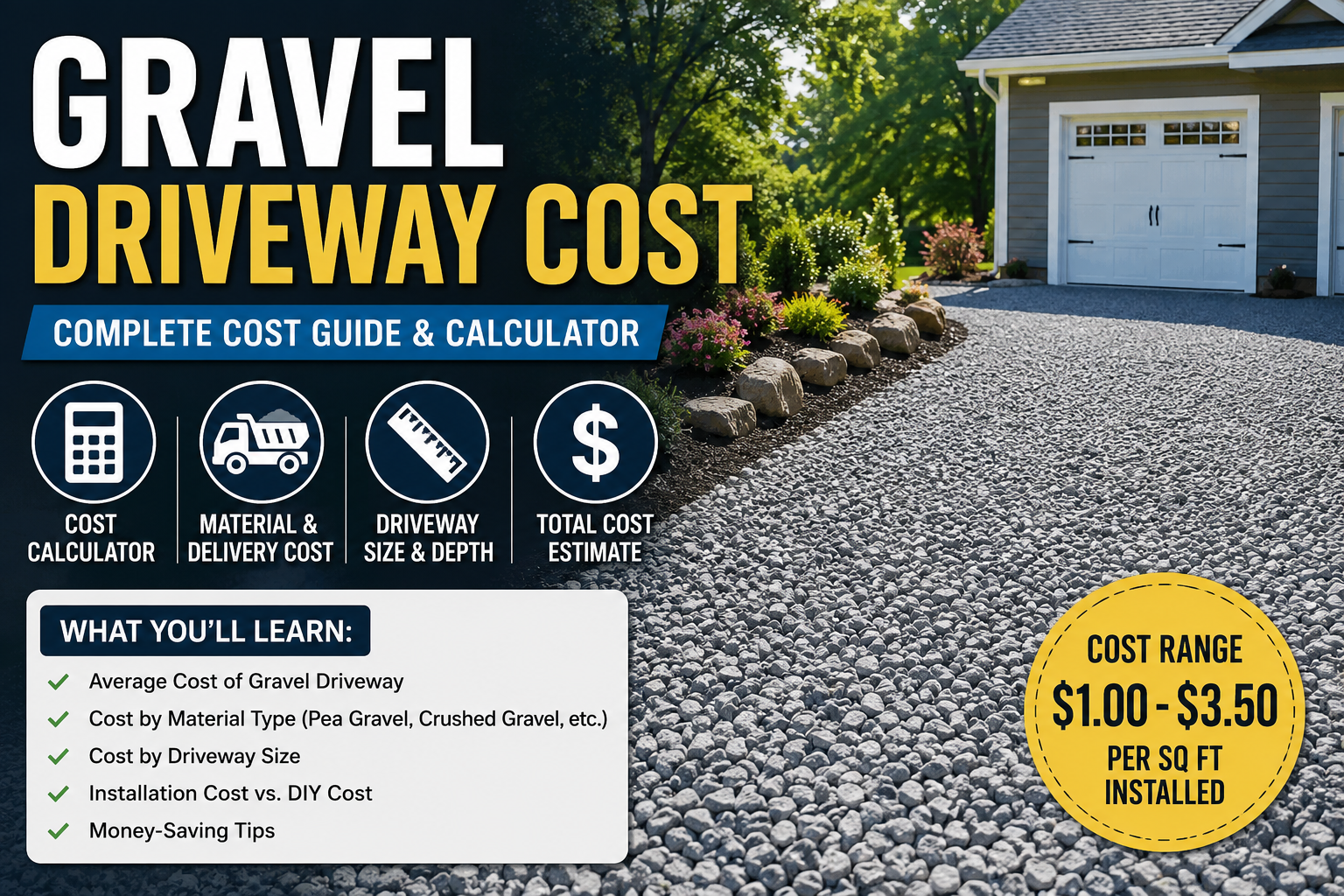
A gravel driveway can look simple until you start adding up truckloads, delivery, grading, drainage, and labor. That is why the gravel driveway cost can feel confusing at first. One supplier may quote by the ton, another by the cubic yard, and a contractor may include everything in one price.
Most homeowners spend about $500 to $3,500 for a gravel driveway, with an average close to $1,800. The final price depends on your driveway size, gravel type, depth, delivery distance, site condition, and whether you need professional installation.
This guide explains the cost of gravel driveway projects in simple terms. You will learn how much does a gravel driveway cost, how to estimate the amount of stone you need, and how to avoid common budgeting mistakes before ordering.
Average Gravel Driveway Cost at a Glance
The average gravel driveway cost is around $1,800, but many projects fall between $500 and $3,500. Smaller driveways with firm ground and easy truck access usually cost less. Long, sloped, soft, or poorly drained driveways can cost much more.
Angi reports a typical gravel driveway installation range of $500 to $3,500, while the cost can range from roughly $1 to $10 per square foot depending on the gravel type, driveway size, depth, and site preparation work.
|
Driveway Size |
Typical Use |
Estimated Cost Range |
|
200–300 sq ft |
Small single-car area |
$250–$900 |
|
400–600 sq ft |
Standard double-car driveway |
$800–$2,200 |
|
1,000+ sq ft |
Large, circular, or wide driveway |
$1,000–$5,000 |
|
2,000 sq ft |
Long rural driveway |
$3,500–$6,000+ |
These are planning estimates, not fixed contractor prices. Local gravel availability, supplier minimums, labor rates, and site access can change your final driveway gravel cost.
Cost Per Square Foot
The cost to gravel a driveway is often calculated by square foot, but that number includes more than the stone itself. You may need to pay for excavation, base material, delivery, spreading, compaction, drainage, and labor.
A small resurfacing job can be affordable if your existing driveway base is stable. A new gravel driveway cost is higher because it may need clearing, grading, geotextile fabric, several gravel layers, and drainage work.
Material-Only Cost vs. Installed Cost
The cost of driveway gravel is only one part of your total budget. Material-only pricing can look low at first, but delivery and site work can quickly increase the final cost.
For example, you may pay for:
- Gravel material by the ton or cubic yard
- Delivery from a local quarry or supplier
- Equipment rental
- Labor for spreading and compacting
- Grading and leveling
- Drainage channels or culverts
- Weed barrier or geotextile fabric
- Removal of an old driveway surface
If you only need to refresh a stable driveway, your cost for gravel driveway work may be much lower than building a new driveway from bare soil.
Gravel Driveway Cost by Material Type
The gravel for driveway cost depends on the material you choose. Some materials work best for a compacted base. Others are better for the visible top layer or decorative borders.
Angular stone is usually better for driveways because it locks together under vehicle weight. Smooth river rock and pea gravel can look good, but they may move more under tires.
|
Gravel Type |
Best Use |
Typical Cost Range |
|
Item #4 or road base |
Compacted base layer |
$10–$25 per ton |
|
Crusher run |
Strong base or surface layer |
$20–$40 per ton |
|
Crushed limestone |
Base and driveway surface |
$30–$40 per ton |
|
Crushed granite |
Durable top layer or decorative finish |
$25–$50 per ton |
|
Pea gravel |
Decorative or light-use areas |
$20–$80 per ton |
|
River rock |
Borders and decorative areas |
$45–$100 per ton |
|
White gravel or marble chips |
Decorative finish |
$50–$400 per ton |
Angi’s 2026 material guide lists Item #4 at about $10–$25 per ton, crushed limestone at about $30–$40 per ton, and premium decorative materials at higher prices.
Crushed Gravel Driveway Cost
Crushed gravel driveway cost is often lower than concrete or asphalt, especially for long driveways. Crusher run, crushed stone, and road base are common choices because they compact well and create a more stable driving surface.
Crusher run contains crushed rock and fine particles. The smaller material fills gaps between larger stones, helping the driveway stay firm. Local suppliers may call it crusher run, dense grade aggregate, road stone, or quarry process.
Before placing an order, compare the best gravel for driveways based on your soil type, weather, drainage needs, and vehicle traffic.
What Changes the Cost to Install a Gravel Driveway?
The total cost to install a gravel driveway changes most when the site needs extra work. Gravel itself may be affordable, but poor drainage, weak soil, and uneven grading can lead to ruts, potholes, and washouts.
Driveway Length, Width, and Depth
A larger driveway needs more material, more truckloads, and more labor. Most residential driveways need about 4 to 6 inches of gravel, although soft soil or heavy vehicles may need a deeper base.
A small increase in depth can add several tons of gravel. That is why you should measure your driveway before asking how much does driveway gravel cost.
For example, a 12-foot by 40-foot driveway has 480 square feet. At 4 inches deep, it requires much less material than the same driveway at 6 inches deep.
Base Layer and Surface Layer
A durable driveway often has more than one layer. The lower base layer handles weight and drainage. The upper layer gives the driveway a smoother appearance and better driving surface.
The cost to build a gravel driveway increases when you need:
- Thick road base
- Geotextile fabric
- Crushed stone top layer
- Compacting equipment
- Edge restraints
- Drainage channels
Skipping the base layer may save money at first, but it can cause expensive repairs later.
Grading, Drainage, and Excavation
Good drainage is one of the most important parts of a gravel driveway. Water that sits on the surface can wash away gravel, create potholes, and weaken the base.
Angi estimates grading specialists may charge about $1,000 to $2,500 for driveway preparation, while delivery often ranges from about $100 to $500 per load depending on distance and truck access.
Your gravel driveway installation cost can increase when the property has:
- A steep slope
- Soft or wet soil
- Tree roots
- Poor drainage
- Limited truck access
- An old concrete or asphalt driveway
- A long private road
Delivery and Truckload Minimums
How much does a load of driveway gravel cost? The answer depends on your location, material type, quarry distance, truck size, supplier minimums, and fuel costs.
Always ask suppliers these questions before ordering:
- Is the price per ton or per cubic yard?
- Does the quote include delivery?
- What is the minimum order quantity?
- How many tons fit in one truckload?
- Is dumping included?
- Can the truck access my driveway safely?
- Does the price include tax or fuel charges?
How to Estimate Your Gravel Driveway Cost
You can create a useful gravel driveway cost estimate before calling suppliers. Start with the driveway length, width, and planned depth.
Step 1: Measure Length and Width
Measure the driveway in feet.
Length × Width = Square Feet
For example:
12 feet × 40 feet = 480 square feet
Step 2: Convert Gravel Depth Into Feet
You need the gravel depth in feet for the calculation.
- 3 inches = 0.25 feet
- 4 inches = 0.33 feet
- 5 inches = 0.42 feet
- 6 inches = 0.50 feet
Step 3: Calculate Cubic Feet
Multiply your total square feet by the planned depth.
Square Feet × Depth in Feet = Cubic Feet
For a 480-square-foot driveway at 4 inches deep:
480 × 0.33 = about 158 cubic feet
Step 4: Convert Cubic Feet Into Cubic Yards
Divide cubic feet by 27.
158 ÷ 27 = about 5.9 cubic yards
Step 5: Convert Cubic Yards Into Tons
Gravel weight changes by material. Many gravel products weigh about 1.2 to 1.7 tons per cubic yard.
A 5.9-cubic-yard driveway project may need roughly 7 to 10 tons of gravel. Confirm the supplier’s weight factor before ordering because crushed stone, limestone, pea gravel, and river rock have different densities.
Use the Driveway Gravel Calculator to estimate cubic yards, tons, coverage, and material cost based on your local price.
DIY Gravel Driveway Cost vs. Hiring a Contractor
DIY gravel driveway cost can be lower because you may avoid labor charges. However, DIY does not remove material, delivery, equipment, drainage, or grading costs.
Angi estimates materials and equipment for many DIY gravel driveway projects at roughly $800 to $2,500. Professional installation can range from around $1,500 to $6,000, depending on the driveway size and site condition.
|
Option |
Best For |
Main Risk |
|
DIY installation |
Small, level driveways with a stable base |
Poor drainage or weak compaction |
|
Professional installation |
Large, sloped, soft, or new driveways |
Higher labor cost |
|
Hybrid approach |
You buy gravel; contractor grades and compacts |
Requires clear coordination |
DIY may work when the driveway is small, flat, and already has a solid base. You still need the right equipment, including a plate compactor, rake, shovel, wheelbarrow, and sometimes a skid steer.
Hire a professional when you have standing water, a steep driveway, soft soil, heavy vehicles, or a long rural road. A poor installation can cost more to repair than the original work.
Read the complete DIY gravel driveway cost guide before choosing the DIY route.
Ways to Lower the Cost of a Gravel Driveway
You can lower the cost to put in a gravel driveway without cutting corners on the base or drainage.
- Get quotes from at least three local suppliers.
- Compare delivered prices, not pickup-only prices.
- Use locally available stone instead of expensive decorative rock.
- Reuse a stable driveway base where possible.
- Order the correct amount the first time.
- Avoid decorative gravel for structural layers.
- Fix drainage problems before adding a new top layer.
- Schedule work when contractors have better availability.
- Maintain the driveway before ruts become deep.
Measure carefully with a gravel calculator so you do not pay for an extra truckload or run out of material during installation.
Should You Repair, Resurface, or Build a New Gravel Driveway?
Adding fresh gravel to a stable driveway is usually cheaper than starting over. If the base drains well and only has shallow potholes, resurfacing may be enough.
You may only need to:
- Fill low spots
- Regrade the crown
- Add a new top layer
- Compact loose gravel
- Improve drainage at the edges
A new gravel driveway cost is higher when the base has failed. You may need excavation, fabric, new base rock, drainage work, compacting, and several gravel layers.
Build a new driveway when the surface holds water, deep ruts keep returning, or the existing base is unstable.
Gravel Driveway Cost FAQs
How much does a gravel driveway cost?
A gravel driveway often costs between $500 and $3,500 installed. The average cost of a gravel driveway is around $1,800, but local material prices, driveway size, delivery, labor, and drainage can change the total.
How much does it cost to gravel a driveway?
The cost to gravel a driveway depends on whether you are resurfacing an existing base or building a new driveway. A simple top layer costs less than a full project with grading, drainage, fabric, compaction, and labor.
How much does driveway gravel cost by the ton?
Driveway gravel cost by the ton can range from around $10 for basic road base to more than $100 for decorative stone. Crusher run, crushed limestone, pea gravel, and river rock all have different prices.
What is the average cost for gravel driveway installation?
The average cost for gravel driveway installation is around $1,800. Small driveways may cost less, while long rural driveways or properties with poor drainage may cost several thousand dollars more.
How much does it cost to make a gravel driveway?
The cost to make a gravel driveway includes material, delivery, labor, base preparation, grading, compaction, and drainage. A small, flat driveway may be affordable, while a sloped or soft-soil project needs a larger budget.
How much does it cost to build a gravel driveway?
The cost to build a gravel driveway depends on the ground condition. New construction often costs more because it may need excavation, geotextile fabric, a deep base layer, grading, and several truckloads of stone.
How much does it cost to put gravel on a driveway?
Adding gravel to an existing driveway is usually cheaper than building a new one. Your cost depends on how many tons you need, the gravel type, delivery fee, and whether the driveway needs regrading first.
Is crushed gravel good for a driveway?
Yes. Angular crushed gravel usually performs well on driveways because it locks together under tires. Use a crushed gravel calculator to estimate the material amount for your driveway size and planned depth.
How much gravel do I need for a driveway?
Multiply driveway length by width and depth. Then divide cubic feet by 27 to find cubic yards. Convert yards to tons using your supplier’s density factor. A gravel coverage calculator can help you estimate the correct amount.
Do I need a permit for a gravel driveway?
Some cities and counties require permits when a driveway connects to a public road, changes drainage, or needs a culvert. Check with your local building department or public works office before starting work.
Final Cost Check Before Ordering Gravel
The gravel driveway cost depends on three main decisions: how much material you need, which gravel type suits your project, and how much site preparation the ground requires.
Measure the full driveway, choose a realistic depth, and separate material, delivery, grading, drainage, labor, and equipment in your budget. Do not choose a supplier based only on the cheapest material price. A low price can become expensive if delivery, weak base work, or poor drainage create future repairs.
Use the calculator to turn your measurements into cubic yards and tons. Then compare local quotes using the same gravel type and quantity before scheduling delivery.